

🔎 Introduction
In real advertising projects, the decision between a Outdoor Digital Display Board and a traditional printed billboard is rarely a simple "which looks better" question.
It usually comes down to three practical concerns we repeatedly see from clients:
How much revenue can this location generate over time?
How flexible is the advertising space?
What is the real long-term maintenance cost?
From our experience in LED display manufacturing and outdoor installation projects across different regions, we've seen both solutions used successfully-but in very different business scenarios.
This article breaks down the comparison based on real deployment conditions, not theory.
🆚 H1: Digital vs Traditional Advertising Boards
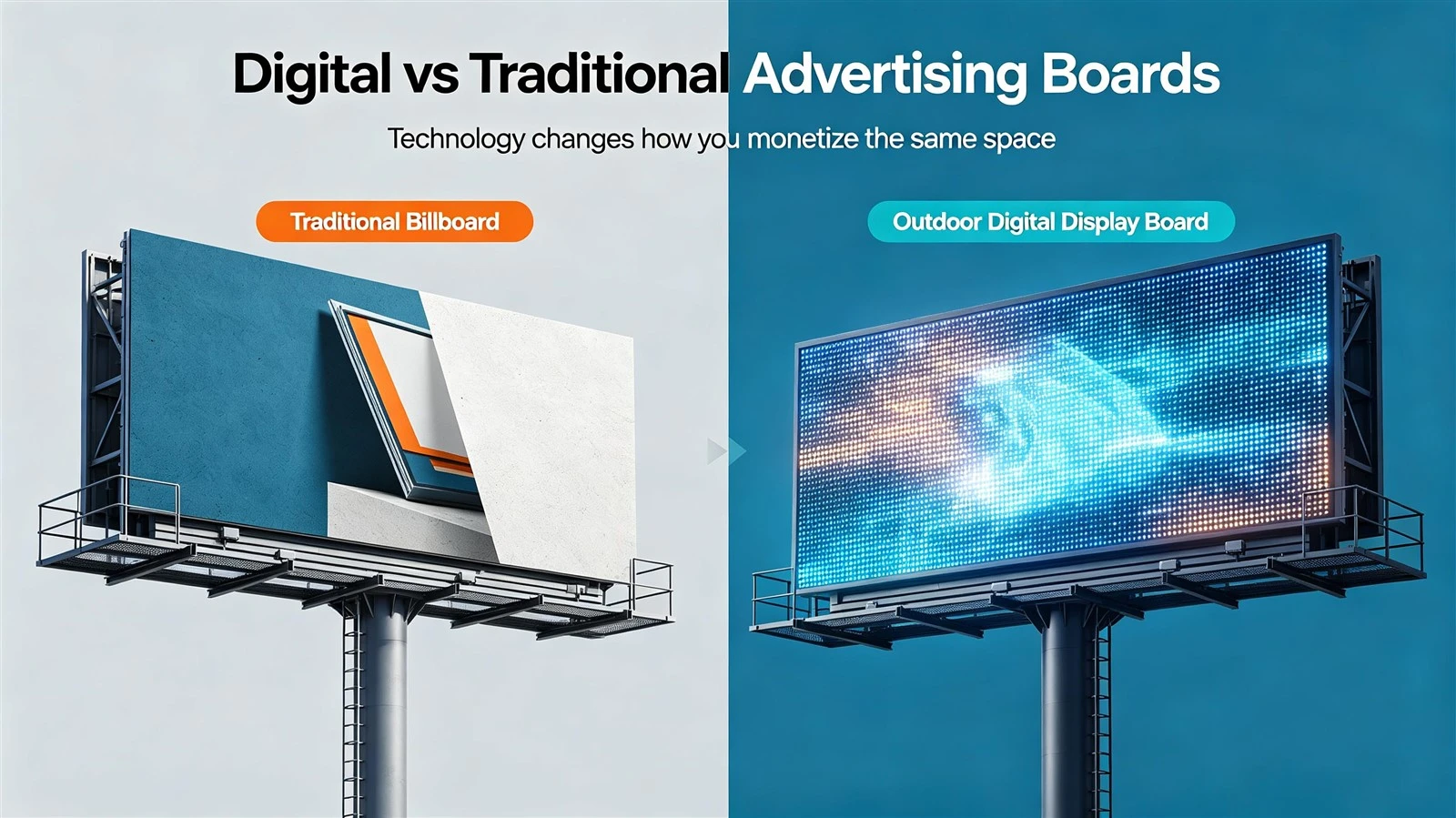
At a system level, the difference is not just about display technology.
Traditional billboard → static printed media with fixed content
Outdoor Digital Display Board → programmable, revenue-generating display system
This distinction directly affects how advertisers monetize the same physical space.
👁 H2: Visual Impact Comparison (Real usage perspective)
Traditional Billboards
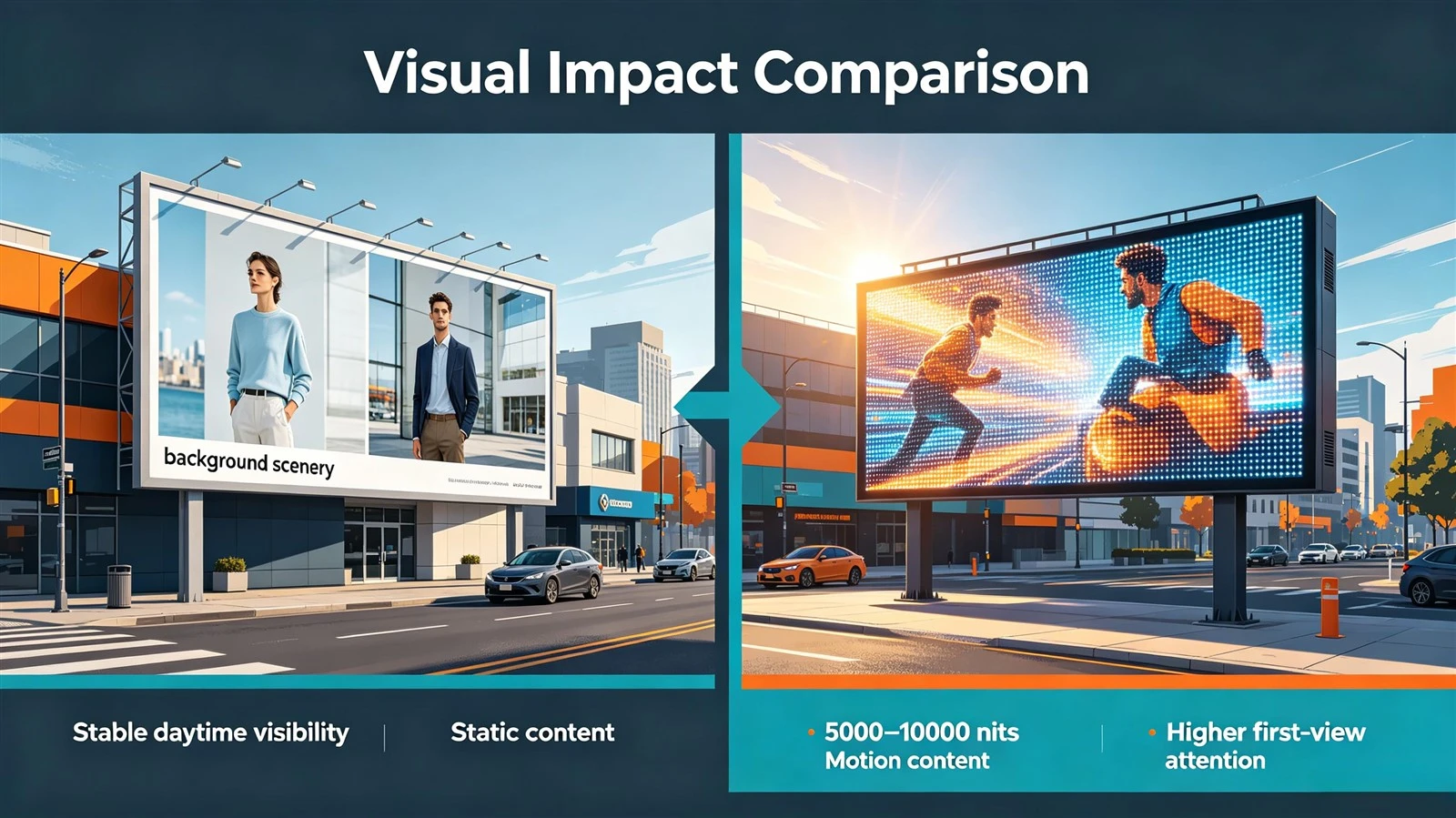
In real outdoor environments, printed billboards perform well only under specific conditions:
Daytime visibility is stable
No motion content means lower attention retention
Performance drops significantly after repeated exposure
We often see in high-traffic urban areas that static billboards become "background scenery" after a short period.
Outdoor Digital Display Board
A properly engineered Outdoor Digital Display Board performs differently:
High brightness (5000–10000 nits) ensures visibility under direct sunlight
Motion video content increases first-view attention significantly
Dynamic scheduling keeps content "fresh" even in the same location
In real advertising districts, this freshness effect is one of the biggest performance advantages.
💰 H2: Cost Efficiency Over Time (What buyers often misjudge)
At first glance, printed billboards appear cheaper.
But in actual long-term operation, the cost structure changes completely.
Traditional Billboards (Hidden cost model)
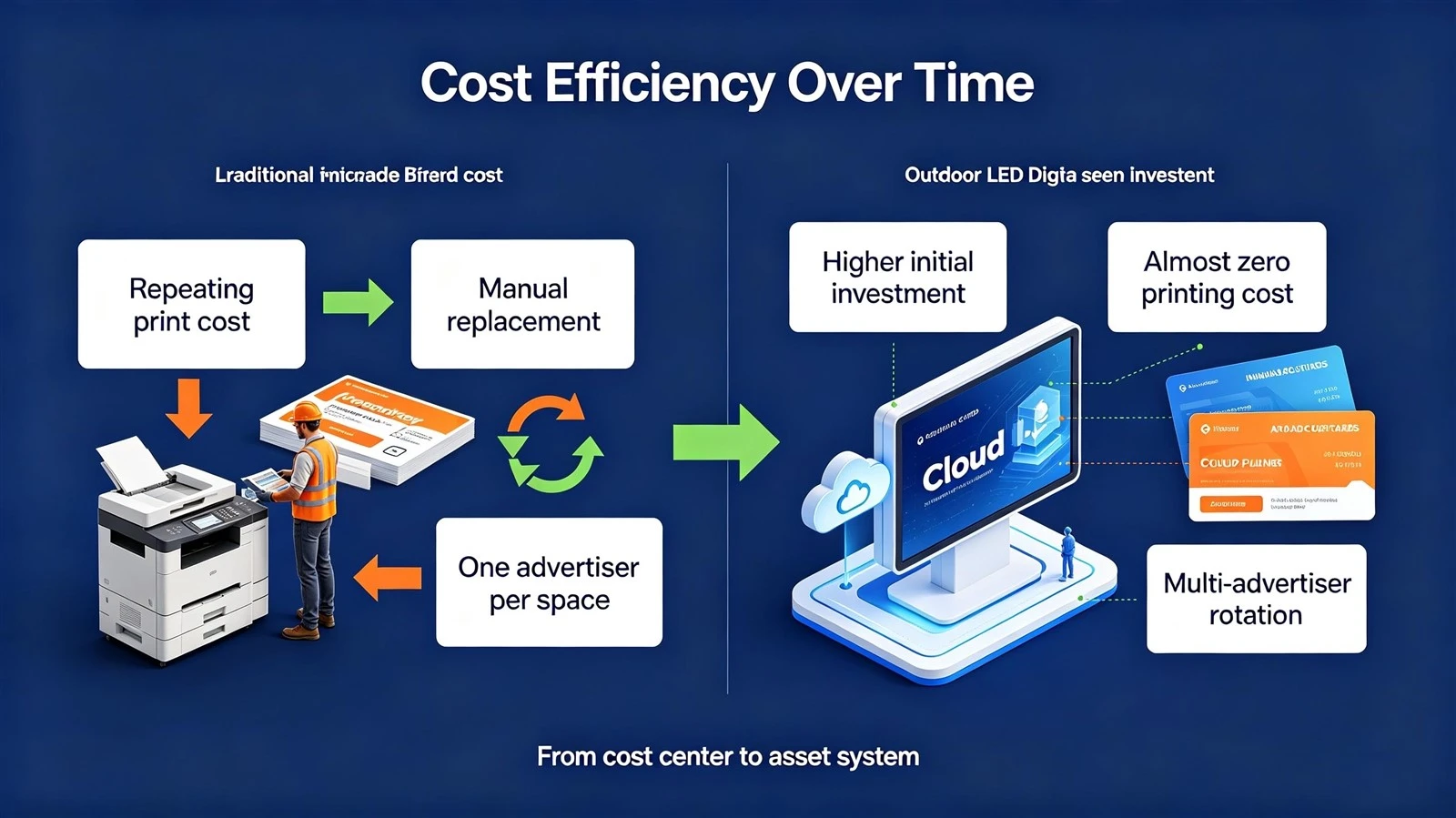
Printing cost repeats every campaign cycle
Manual labor required for replacement
Weather damage leads to early reprint cycles
Revenue is limited to one advertiser per space
In many cases, the "low cost entry" becomes a recurring expense model.
Outdoor Digital Digital Display Board (Investment model)
Higher initial investment
Almost zero printing cost after installation
Multiple advertisers can rotate on the same screen
Remote content management reduces labor cost
In urban advertising projects we've worked on, this model often shifts from "cost center" to "asset system".
🔄 H2: Content Flexibility (Biggest operational gap)
This is where the difference becomes structural.
Traditional Billboard
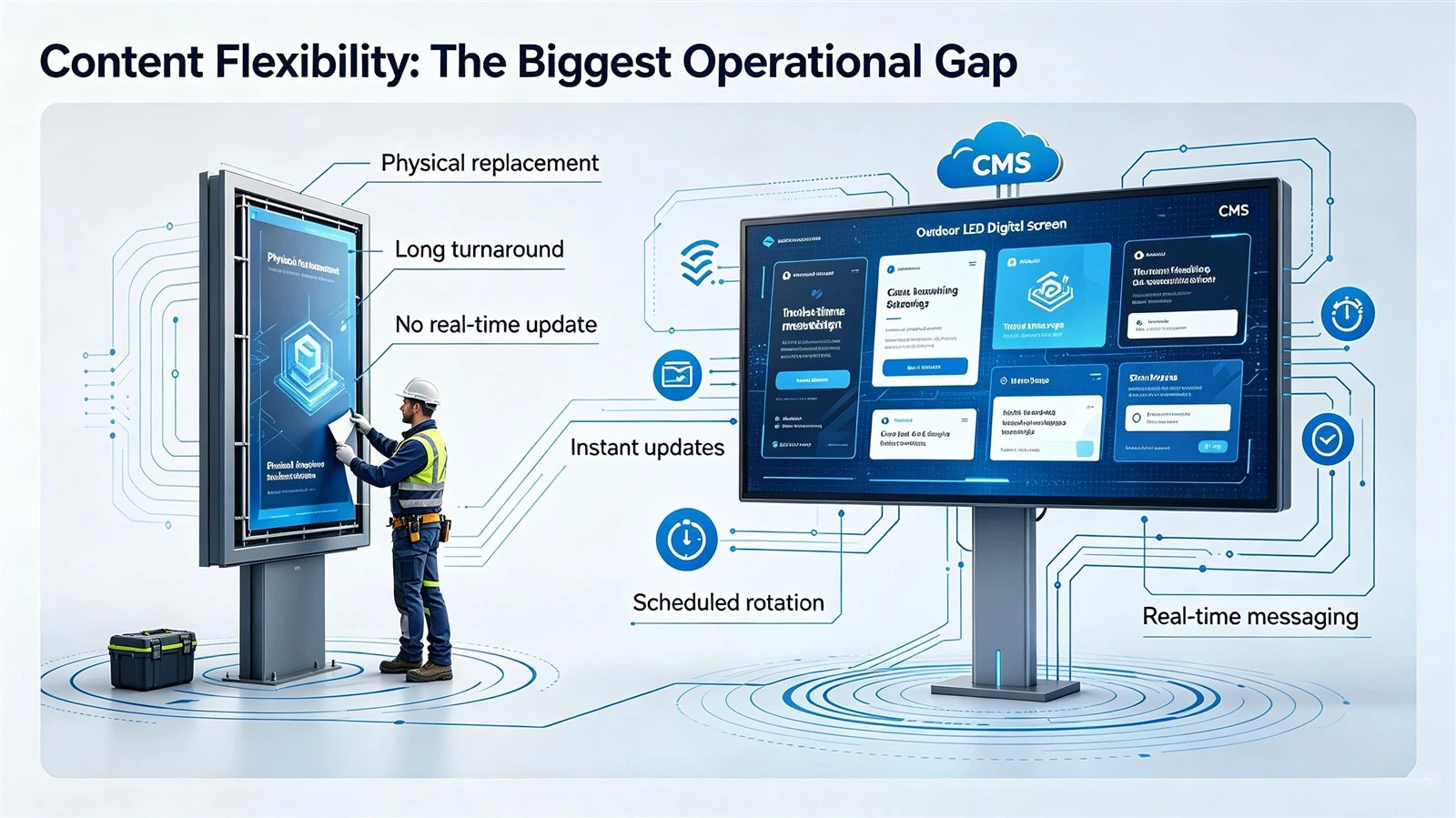
Content change requires physical replacement
Long turnaround time for campaign updates
No emergency or real-time messaging capability
This limits responsiveness in fast-moving marketing environments.
Outdoor Digital Display Board
A modern Outdoor Digital Display Board allows:
Instant content updates via CMS
Scheduled multi-brand rotation
Real-time campaign optimization
Emergency message broadcasting (public information use cases)
In smart city deployments, this flexibility is often the main reason for adoption.
🔧 H2: Maintenance Differences (Field reality)
Traditional Billboards
Maintenance is simple but repetitive:
Print replacement
Structural cleaning
Weather damage repair
However, labor dependency is high and ongoing.

Outdoor Digital Display Board
Maintenance shifts from physical to technical:
LED module replacement over time
Power supply and control system servicing
Waterproof sealing inspection
Brightness calibration and color consistency tuning
In well-designed systems, maintenance frequency decreases significantly after initial stabilization.
📊 H2: ROI Analysis (Decision-making core)
This is usually the final deciding factor in commercial projects.

Traditional Billboard ROI
Fixed rental model
One advertiser per space
Revenue ceiling per location
Even in high-traffic areas, revenue is structurally limited.
Outdoor Digital Display Board ROI
A Outdoor Digital Display Board enables:
Multiple advertisers per time slot
Dynamic pricing during peak hours
Higher utilization of same physical space
Data-driven campaign scheduling
In many city-center installations, advertisers can achieve 2–4x higher revenue potential per location compared to static boards.
🧭 Real-world Decision Logic (Important EEAT section)
Based on actual project deployment experience:
Traditional billboards are still suitable for:
Low-budget local advertising
Rural or low-traffic highways
Short-term campaign use
Outdoor Digital Display Board is preferred for:
High-traffic urban environments
Smart city infrastructure projects
Long-term advertising revenue systems
Multi-client advertising networks
❓ FAQ (SEO + Real intent optimized)
Are LED billboards worth investment?
In high-traffic commercial locations, yes. The ability to rotate advertisers significantly increases revenue potential compared to static billboards.
Which has better advertising ROI?
In most urban markets, Outdoor Digital Display Boards outperform traditional billboards due to multi-advertiser monetization and dynamic pricing models.
Can digital boards replace print ads completely?
Not completely. Traditional billboards still serve low-cost and rural advertising needs, but digital systems are rapidly replacing them in cities.