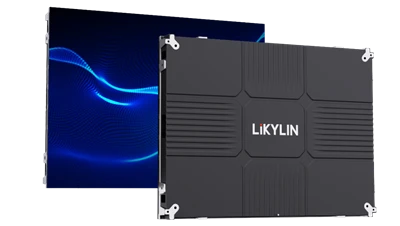
Outdoor 3D LED Displays: Why Cities and Brands Are Betting on Them
A driver glances at a roadside billboard for maybe two seconds before moving on. That's the problem every outdoor advertiser is up against right now - attention is scarce, and flat static ads are losing the fight for it.
Naked-eye 3D LED screens changed that math. The Shinjuku 3D cat on Cross Shinjuku Vision in Tokyo is the case everyone points to: a giant calico appears to lean out of a curved corner screen above the street, and the installation has turned into a genuine tourist stop, pulling in crowds and social posts that a flat display never would. Similar corner and curved-surface installs have since gone up in Seoul, New York's Times Square, and Dubai, each one doing the same job - turning a building facade into something people stop for.
At LiKYLIN, we build the hardware and structural side of these projects. Getting a 3D effect that actually reads as 3D - not just a big bright screen - takes more engineering than most buyers expect, and that's really what this page is about.

Why 3D LED Outperforms a Standard Billboard
A flat display tells people something. A well-built 3D display makes them stop and look - and that difference shows up directly in the numbers that matter to a media owner or property manager.
It grabs attention faster. Depth and motion register with the eye before text does. A car appearing to drive off the screen, or a product floating above the roofline, gets noticed in the first second or two - which is basically all the time you have with a passerby.
It gets shared, not just seen. People photograph and post these installs. That's free reach that extends well past the physical location of the screen, and it's the reason a handful of 3D installations worldwide have become recognizable landmarks in their own right rather than just ad space.
It raises the value of the real estate around it. For mall operators and building owners, a working 3D screen isn't just a media asset - it changes foot traffic and, over time, the commercial value of the space it's attached to.

What Actually Makes a Screen "3D" (Most Don't Qualify)
Here's the part that catches a lot of buyers off guard: size alone doesn't create a 3D effect. We get this question constantly - "we bought a big LED wall, why doesn't it look 3D?" The answer is almost always the same. A 3D illusion is the product of three things working together, not one:
The structure. Most convincing 3D installs sit on a building corner or a curved surface, built with seamless 90° joints so there's no visible seam or black line breaking the illusion where two panels meet. A flat cabinet-built wall, however large, simply can't produce the same depth - the gaps between modules give it away.
The brightness and contrast. Outdoor screens fight direct sunlight all day. Without enough brightness the image washes out and the depth illusion collapses. LiKYLIN's outdoor 3D modules run at 5,500–8,500 nits with automatic brightness adjustment, and contrast up to 10,000:1 for the black levels and shadow detail that actually sell the depth.
The content. This is the one people underestimate most. 3D content isn't a regular video - it's built using anamorphic perspective, meaning the image is deliberately distorted so it only resolves into a convincing 3D shape from one specific viewing point on the street. Get the corner geometry, viewing distance, or pixel mapping wrong, and even premium hardware plays back as a flat video with a slight bend in it.

A quick way to see the gap:
|
|
Standard Outdoor LED |
Properly Engineered 3D LED |
|
Structure |
Regular flat cabinets |
Seamless corner or curved build |
|
Content |
Standard video |
Anamorphic, perspective-mapped |
|
Brightness |
General outdoor grade |
High-brightness, sunlight-readable |
|
Viewing experience |
Not angle-optimized |
Designed around one viewing point |
Skip any one of these and the "3D" screen ends up being a normal display with a bigger price tag.
Picking the Right Pixel Pitch
Pixel pitch decides how close a viewer can stand before the image starts to look grainy, and it's usually the first spec buyers ask about - but the right number depends entirely on viewing distance, not just budget.
P4 - close-range, premium storefronts and street-level facades
P5 - shopping mall exteriors, urban commercial fronts
P6.67 - building corners and larger outdoor ad walls
P8 - big billboards viewed from mid-range distance
P10 - large structures meant to be seen from far away
Installation height, average viewing distance, and how much detail the content needs all factor in here - a P4 screen on a highway overpass is wasted resolution, and a P10 screen on a narrow street will look chunky up close.

Where Location and Angle Make or Break the Effect
A naked-eye 3D illusion only works from a specific vantage point, which means the engineering has to start with the street, not the screen. Before any install, we look at pedestrian flow, traffic direction, and where people actually stand or drive when they'd view the screen. Get this wrong and the "3D" content just looks warped from most angles - a common failure point on installs done without proper site survey.
Screen size and shape also need to work with the building it sits on, not against it. The strongest installs read as part of the architecture - a corner, an L-shaped facade, a curve - rather than a rectangle bolted onto a wall.
Built for Real Outdoor Conditions
An outdoor 3D screen has to survive weather, not just look good in a rendering. LiKYLIN's outdoor 3D LED line is rated IP65 and built to operate continuously from -30°C to +50°C, with a thermal design intended to hold up in coastal humidity, desert heat, and cold winters alike.
Running costs matter too over the life of the screen. Our modules use Common Cathode circuitry, which cuts power draw and heat output compared to conventional LED driving - a meaningful difference once you're running a large facade-scale screen year-round.

Where These Screens Get Used
City landmarks - commercial districts and public squares using a screen to become a destination in itself
Shopping malls - facade screens for campaigns and product launches
Automotive and luxury retail - brand launches that lean on visual spectacle
Transit hubs - airports and stations with heavy, captive foot traffic
Live events - concerts and festivals using 3D visuals as part of the show
What Actually Drives the Budget
Buyers often price a 3D LED project by screen cost alone, then get surprised by the real total. Four things make up the real number:
The display itself - pixel pitch, size, brightness spec, cabinet material, and ingress protection rating all move the price.
Structural work - corner steelwork, building integration, wind load engineering, and power distribution. This is where a lot of quotes fall short, because some suppliers price the panels and leave the structure to the customer.
Content production - anamorphic 3D content isn't a standard video edit; the complexity of the animation and the modeling work involved is a real line item, not an afterthought.
Running costs - power draw, maintenance, and spare parts availability over the years the screen operates. Energy-efficient hardware pays this back over time.

Why Work With LiKYLIN
We handle the display, the structural engineering, and the project support together, rather than shipping panels and leaving the rest to the customer.
Seamless corner and curved builds - 90° seamless corners, curved surfaces, and L-shaped facades engineered to match the building, not a generic module
Full project support - site evaluation, structural planning, and system integration handled in-house
Outdoor-rated hardware - IP65, -30°C to +50°C operating range, built-in thermal management
High brightness, lower running cost - 5,500–8,500 nits, ≥3,840Hz refresh rate, Common Cathode energy-saving design


Technical Parameters
| Parameter | Specifications (Standard & Custom) |
| Module Resolution | Customized according to selected Pixel Pitch |
| Pixel Pitch Options | P4 / P5 / P6.67 / P8 / P10 |
| Corner Mechanical Angle | Seamless 90-Degree / Custom Smooth Curved Radius |
| Brightness / Refresh | 5,500 to 8,500 nits (Adjustable) / 3,840 Hz or higher |
| Contrast Ratio | 8,000:1 to 10,000:1 (For absolute black depth) |
| Protection Grade | IP65 Front and Rear (Heavy Rain & Dust Resistant) |
Core Highlights
- Seamless Corner Splicing: Utilizing proprietary curved or bevel-cut modules to achieve a flawless, seamless transition at the corner, eliminating the black line gap that destroys the 3D optical illusion.
- Ultra-High Contrast & Brightness: Engineered with premium black-frame LEDs and up to 8,000 nits brightness, ensuring vivid, texturized 3D depth even under direct, harsh sunlight.
- IP65 Weatherproof Hardening: Fully sealed aluminum chassis provides complete protection against heavy rain, dust, typhoons, and extreme temperatures (-30 to +50 degrees Celsius).
- Energy-Saving Common Cathode Tech: Reduces power consumption and heat generation by up to 30%, significantly lowering long-term operating costs for media owners and advertising networks.
Customizable Specifications
Pixel Pitch (P): P4 / P5 / P6 / P8 / P10 (Customized based on viewing distance)
Structural Profiles: 90-degree seamless sharp corners / Smooth convex and concave curves / Massive L-shaped structures
Cabinet Dimensions: Custom iron/aluminum cabinets tailored to exact building facade blueprints
Brightness Level: Standard 5,500 nits up to ultra-high 8,000+ nits with automatic ambient light sensors
Core Components (BOM): Gold-wire LEDs (e.g., Nationstar), high-contrast black shell lamps, and energy-saving high-refresh driver ICs
Maintenance Layout: 100% Full Front-Access / Full Rear-Access configurations depending on building installation depth
Scenario-Based Applications
- City Landmark Digital Billboards: Turns prime real estate building corners into a local tourist destination, generating massive organic social media buzz and viral brand traction.
- Commercial Shopping Plaza Facades: Enhances retail property value and maximizes ad-space monetization by offering premium, high-impact 3D ad slots for luxury brands.
- Transportation Hub Signage: Placed at major airports or train station squares to instantly arrest the attention of fast-moving commuter traffic from multiple viewing angles.
FAQ
Q1: Does a 3D LED screen require a specific type of video content?
A: Yes. The 3D illusion is created by forcing a specialized anamorphic distortion into the video material, mapped precisely to the corner of the screen. We provide the exact pixel-to-pixel resolution mapping templates for your animation studio.
Q2: How do you achieve a 3D effect without visible seams at the corner?
A: We do not use standard square cabinets forced together. We engineer custom 45-degree miter-cut cabinets or specialized curved modules that join seamlessly at the junction, creating a perfectly continuous video canvas.
Q3: How does the screen perform in extreme winter or hot desert conditions?
A: The system utilizes industrial-grade common cathode technology which outputs minimal heat. Combined with our IP65-certified heavy aluminum housing and built-in smart ventilation, it operates reliably in environments ranging from -30 to +50 degrees Celsius.
Q4: Is the screen brightness adjustable to prevent local light pollution?
A: Yes. Every screen comes integrated with a smart ambient light sensor system. It automatically ramps up to 8,000 nits during bright daytime for maximum visibility and dims down automatically at night to comply with municipal regulations.
Q5: What is the maintenance access method for massive building installations?
A: We offer both 100% Front-Service (modules pop out forward via specialized tools, ideal for screens mounted flat against walls) and Rear-Service (integrated internal catwalk access, ideal for massive independent billboard structures) depending on your architectural space.
Hot Tags: 3d LED screen outdoor, China 3d LED screen outdoor manufacturers, suppliers, factory, 3d led display, 3d video for led screen, 3d led screen, 3d Led Screen Outdoor, outdoor screen led, 3d Outdoor Advertising Led Display Screen